A higher level of care is required when a senior’s medical needs exceed “custodial care” and demand 24/7 skilled medical intervention or frequent clinical monitoring. While assisted living provides help with daily activities like dressing and bathing, a nursing home is necessary for managing complex chronic conditions, advanced memory loss, or intensive rehabilitation needs that require a licensed medical team.
Determining the right time to transition a loved one can be one of the most emotionally taxing decisions a family faces. However, understanding the clinical triggers that differentiate these two levels of care is essential for ensuring the safety and longevity of your family member.
Understanding the Threshold: Assisted Living vs. Nursing Home
The transition from an assisted living facility to a nursing center is rarely dictated by age; instead, it is driven by “clinical acuity”, a term healthcare professionals use to describe the intensity of medical care a person requires.
In an assisted living setting, the focus is on hospitality and socialization. Residents live in apartment-style environments and receive help with “Activities of Daily Living” (ADLs). However, when a resident’s health destabilizes, the residential model of assisted living may no longer be safe. This is where a rehabilitation home or skilled nursing facility steps in to provide a clinical environment focused on medical stability.
Side-by-Side Comparison of Care Levels
| Feature | Assisted Living (ALF) | Nursing Home (SNF) |
| Primary Goal | Independence & Socialization | Medical Stability & Safety |
| Medical Staff | LPNs/Aides (on-call RNs) | 24/7 On-site RNs & Physicians |
| Care Level | Assistance with ADLs (Bathing, Dressing) | Extensive Medical/Clinical Care |
| Environment | Residential Apartment-style | Clinical/Hospital-style |
| Medication | Management/Reminders | Administration (IVs, Injections) |
5 Critical Signs a Higher Level of Care is Required
If your loved one is currently receiving care at home or in an assisted living community, certain “red flags” indicate that a more robust elder care center environment is needed. During recent assessments for families in Howell, NJ, our clinical teams identified these five recurring indicators:
1. Chronic Wound Care Requirements
Assisted living facilities are generally not equipped to handle complex wound care. If a senior develops Stage III or IV pressure sores or has surgical wounds that require sterile dressing changes multiple times a day, they require the specialized equipment and licensed expertise found in a nursing home.
2. Cognitive Decline and “Exit Seeking.”
While many assisted living facilities have memory care wings, there is a limit to the security they can provide. When dementia progresses to a stage where a senior is constantly “exit seeking” or wandering into unsafe areas, the 24/7 supervised environment of a dedicated nursing center becomes a matter of life or death.
3. The Need for Mechanical Transfers
Safety is a primary concern in our service areas. In an assisted living setting, staff can usually help a resident stand or walk. However, if a senior becomes “non-weight bearing” and requires a Hoyer lift or a two-person assist for every movement, they typically meet the clinical threshold for a higher level of care.
4. Complex Medical Equipment Dependence
Facilities like an autumn lake nursing home are designed to manage medical technology that assisted living staff cannot legally or logically handle. This includes ventilators, frequent tracheostomy suctioning, or the administration of sliding-scale insulin and IV medications.
5. Frequent Hospital Readmissions
If a senior is stuck in a “revolving door” of hospital visits, returning home only to be readmitted within weeks, it is a sign that their current environment cannot manage their medical frailty. A rehabilitation home provides the bridge needed to break this cycle through constant monitoring.
Debunking the “End of Independence” Myth
A common industry misconception is that moving to a nursing home means the total loss of autonomy or the “final” move. This is a significant myth that often prevents families from seeking help when they need it most.
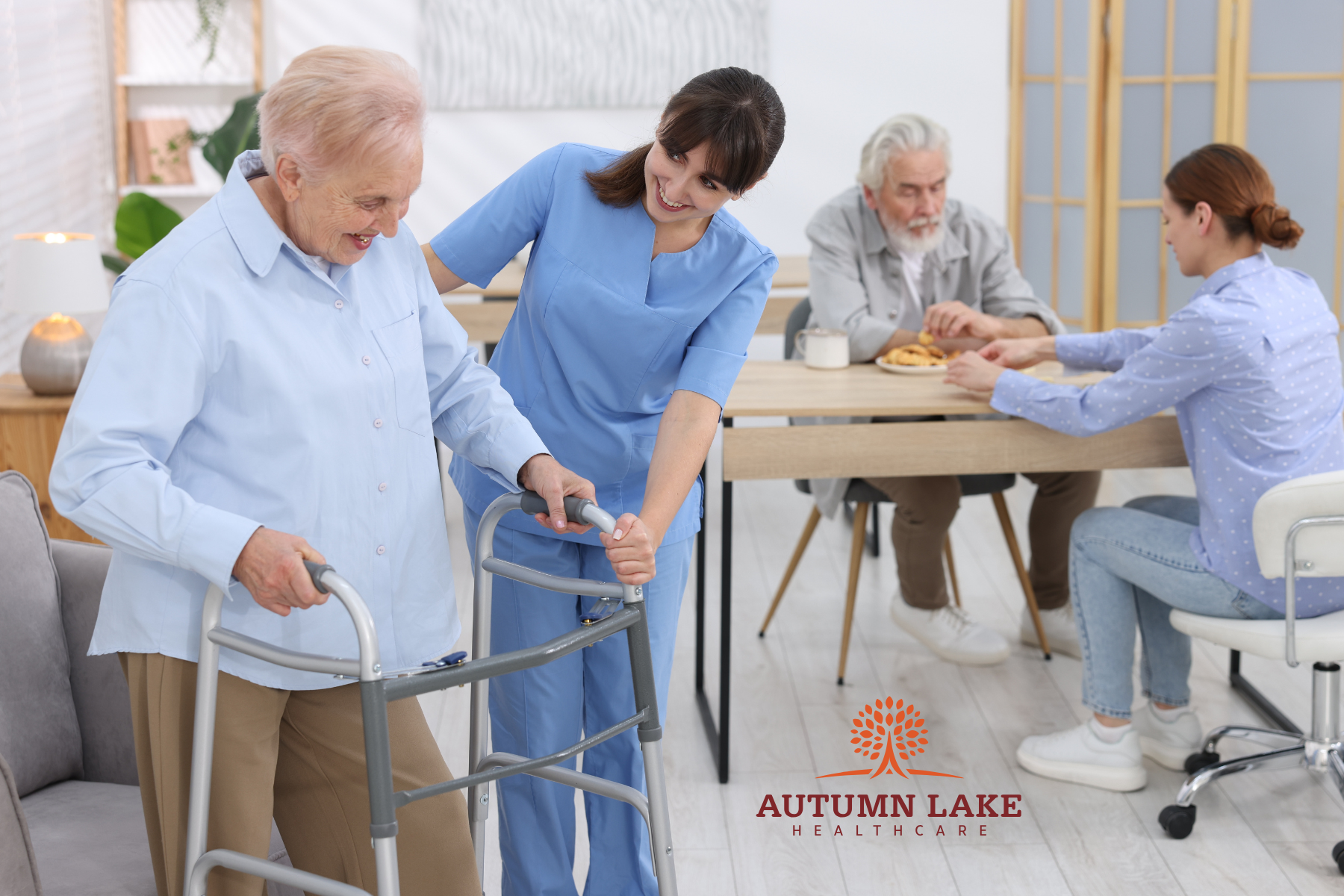
In reality, many residents enter a rehabilitation home for short-term “sub-acute” care. Perhaps they suffered a fall in Howell, NJ, or are recovering from a stroke. The goal of the modern elder care center is often restorative. By providing intensive physical and speech therapy, we help residents regain enough strength to actually return to a lower level of care, such as assisted living or their own private residence.
Our Philosophy: The Path to Quality of Life
We believe that a transition in care should not be viewed as a step back, but as a step toward better health. Our skilled team provides personalized treatment plans in a warm, supportive environment where residents can heal, regain strength, and experience a higher quality of life with trusted, professional care tailored to their needs.
This proprietary approach ensures that we aren’t just treating a diagnosis; we are caring for a person. By integrating clinical excellence with a “home-like” atmosphere, we address the emotional needs of our residents in Howell, NJ, as much as their physical ones. We focus on:
- Healing: Using advanced modalities to accelerate recovery.
- Strength: Tailored PT and OT programs to improve mobility.
- Quality of Life: Ensuring that even those with chronic conditions find joy and social connection daily.
Key Specifications for Placement
When evaluating potential service areas and facilities, keep this checklist of specifications in mind:
- ADL Support: Does the facility provide 24/7 help with feeding, toileting, and grooming?
- IADL Support: Is there assistance for instrumental activities like communication and cognitive therapy?
- Skilled Services: Does the center offer on-site Physical Therapy (PT), Occupational Therapy (OT), and Speech Therapy (ST)?
- Custodial Care: Does the facility provide non-medical supervision for those who are physically healthy but cognitively impaired?
Why Professional Placement Matters
Navigating the healthcare system is complex. Whether you are looking for an autumn lake nursing home or a specialized rehabilitation home, the criteria for admission are strict. Insurance providers, including Medicare and Medicaid, require specific documentation to prove that a “higher level of care” is medically necessary. Our teams across our various service areas work directly with hospitals and primary care physicians to streamline this documentation, ensuring your loved one isn’t caught in a bureaucratic delay.
Frequently Asked Questions
Does Medicare pay for assisted living?
No, Medicare generally does not cover the “room and board” costs of assisted living. It is primarily designed to cover medical expenses. However, Medicare often covers a stay in a nursing home or rehabilitation home for a limited period following a qualifying hospital stay.
What is the main difference between a nursing home and an elder care center?
Often, these terms are used interchangeably. A nursing home typically refers to a facility providing long-term residential medical care, while an elder care center may encompass a broader range of services, including adult day care, assisted living, and skilled nursing.
How do I know if my parent needs “Skilled Nursing” instead of just help at home?
If your parent requires medical procedures that only a licensed nurse can perform, such as IV therapy, wound care, or monitoring of unstable vital signs, they require skilled nursing. If they only need help with cooking and cleaning, they may only require home care or assisted living.
Can a resident be moved from assisted living to a nursing home against their will?
Facilities have “discharge triggers” based on state regulations. If a resident’s safety is at risk because their medical needs exceed what the facility is licensed to provide, the facility is legally required to transition them to a higher level of care to ensure their safety.
To Sum Up
Choosing between assisted living and a nursing home is a journey no one should take alone. At Autumn Lake Healthcare, we specialize in providing that “higher level of care” with a focus on dignity and clinical results. Whether you are seeking a short-term rehabilitation home or long-term support in an elder care center, our team is here to guide you through every step of the process. For more information about our service, contact us to schedule a tour!